

I have started this opener several times, and each time, I have struggled to find the right words.
Perhaps it is because the events of the past week, and especially the last 24 hours, have reminded me of something I have always believed about Proof of Life: that life is fragile, unpredictable and full of moments that deserve to be remembered. Sometimes, you don’t fully understand the weight of a moment until you look back at it. I will share more about that in our 50th episode.
Today, though, I want to talk about someone whose story is tied to some of my earliest memories of growing up.
Hogan is a friend, a brother and one of the few people with whom I can say, without exaggeration, that we spent six uninterrupted years growing up together. If the phrase “Original Boarders” ever meant anything, we were its poster boys.
We shared the old chapel, morning hymns, queues for bread to the sound of MMaba, hostel SAP, punishments, laughter, growing pains and eventually the privilege or burden of becoming seniors and controlling the affairs of the hostel.
When I think about those years now, I realise how much of our lives was being formed in those seemingly ordinary moments.
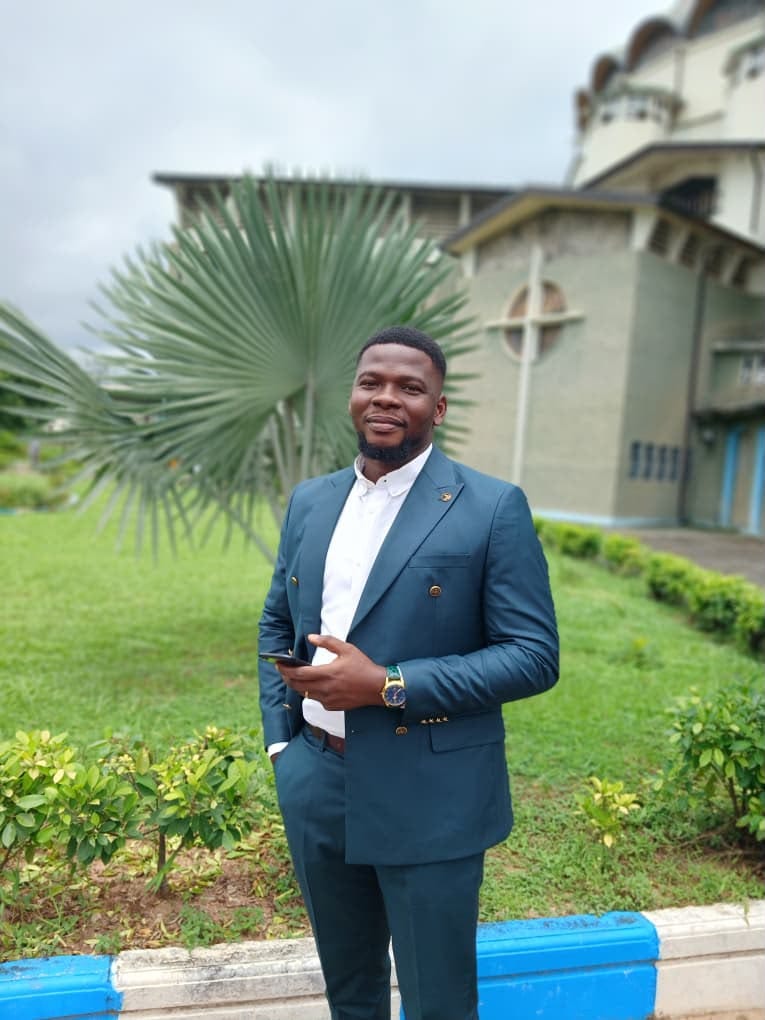
And then there was Hogan’s dad.
I never told Hogy this, but his dad, of blessed memory, gave over 200 young boys a memory that has stayed with me till today. He donated a television to the boys’ hostel, and because of that television, we all gathered together in 2010 to watch Nigeria at the World Cup.
And of course, Yakubu’s miss.
Over 200 boys watched it together. We screamed, groaned, laughed and probably blamed everything and everyone we could think of. At the time, it was just another unforgettable boarding-house moment. Looking back now, I realise that it was also a gift from a man who simply wanted his son’s friends to have something to enjoy.
As a football lover and a friend, I am eternally grateful.
And Hogy, I know you miss him. You probably miss the visiting-day drives, the way he showed up for you, and how, in those years, he somehow made all of us feel like his boys.
That is one of the beautiful and painful things about growing older. The people and moments we once took for granted become some of the things we hold closest.
This episode is about those moments, but it is also about the man Hogan has become ;his journey into coding, finding love, building a life with his amazing wife, navigating Nigeria and carrying the lessons of a childhood that shaped him in more ways than he probably realised at the time.
And I must also say: “Thank you for giving me early tips on what it takes to get married.” 😂
Meet “Hogy Bravo”, everyone.
This is Proof of Life. Enjoy.
Let’s start with the question we ask everyone: what does Proof of Life mean to you? What makes you feel like you’re really living?
It’s a simple question with a complicated answer. It used to mean ticking off a goal and sprinting to the next one with laser focus. Lately, it’s moved closer to home.
When my family is well and thriving, I feel truly alive. Leading them and building real structure and intention into our home is what consumes me these days. Turns out the toughest project I’ve ever managed has no deadline, and I wouldn’t trade it for anything.
We go way back. We were among the few who spent all six years of secondary school in the boarding house. Looking back now, what did those six years teach you about yourself, people, and life, and how much of who you are today can you trace back to those formative years?
Interesting times! 🤣 Those six years taught me that I’m resilient and highly adaptable.
It was a defining chapter, though I didn’t know it at the time. I was dropped off somewhere, my parents drove away, and that was that. Over the next six years, the place grew on me, and I grew too. It was my crash course in human relations, networking, and survival, a sneak preview of the real world. It’s where I picked up adaptability, organization, discipline, a good dose of grit, how to face my fears, and a deep sense of mutual respect and brotherhood.
I’ll be honest: I didn’t love it then. I often wished I could just commute from home. But looking back, I’m glad I stayed (not that anyone asked my opinion). You rarely know you’re living the good old days until they’re behind you, and you rarely appreciate a place until you’ve left it.
I had no clue a foundation was being poured under me. It took becoming a man to see it. My core values and beliefs were formed there. There’s a lot more to say, but I’ll stop here before this turns into a memoir.


There are probably plenty of memories from those days, but if you had to pick one that immediately takes you back to that version of Hogan, what would it be?
So many to choose from, but the one that still makes me laugh out loud is the Sunday-best operation. We’d spend all week preparing to look our sharpest for church, and the real congregation we were dressing for was the girls.
One Saturday, I relaxed my hair to look my best on Sunday. It went so badly wrong that I had to cut it all off. Sunday arrived, and so did my bald head. And the bravery? Non-existent. The mere thought of talking to a girl could stop my heart mid-beat. 🤣


Now that you have your own family, would you ever send your kids to boarding school? Knowing what you know now, what would make you say yes or no?
Yes, absolutely. My wife and I have this debate on repeat. She’s heard plenty of horror stories about boarding schools but never attended one. I heard those stories too, lived some of them, and came out a better person.
I want my children to learn independence early, build real grit, and figure out how to live alongside their peers in a structured environment. For a child between 10 and 16, I honestly don’t know another way to get that all-in-one package.


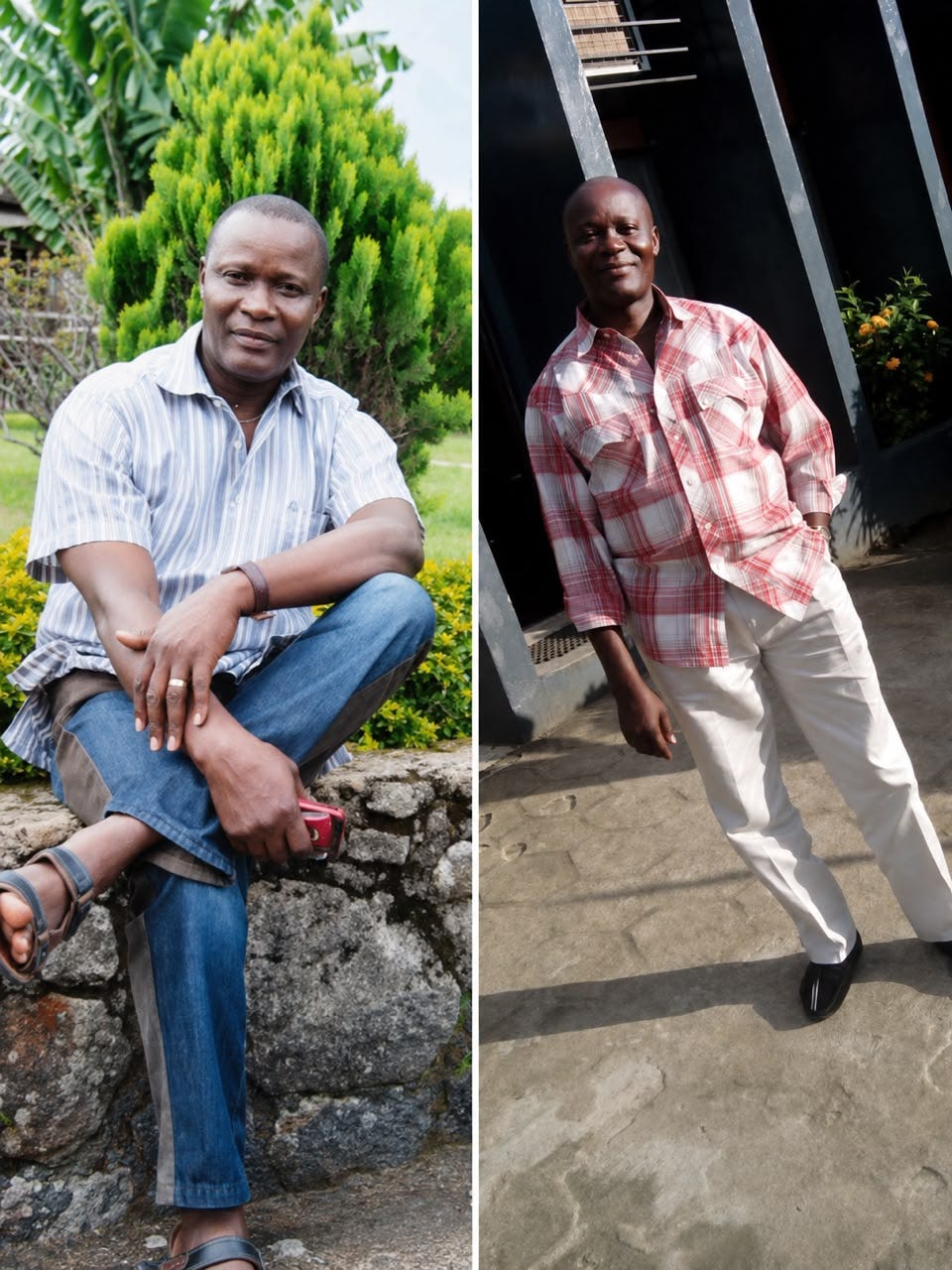
One of the harder chapters of your life was losing your dad at a young age. How did that loss change you, and what did growing up without him teach you about life, family and yourself?
I’ve always had an instinct that warns me when danger is coming. That one still caught me off guard. For a moment, I felt like a house whose fence had been knocked down overnight: insecure, exposed, and weak. Once I pulled myself together, the reality settled in. There was no one left to fall back on, and if I fell, I would fall hard. So I had to keep standing, and standing strong. I became a man out of necessity, because I was suddenly making decisions that were binding on my family and affected real lives. They had to be sound.
Growing up without him was hard, and the role of a father in a boy’s life can’t be overstated. It taught me that you become what you behold. So I studied his life the way a radiologist reads an X-ray, looking closely at his strengths and weaknesses, and I deliberately chose to carry his strengths forward.
These days I catch myself doing things exactly the way he did them, and I take that as a compliment. I also learned to respect myself and others, to live a healthy, cheerful life no matter what comes, and to face my fears head on. And I watched people who weren’t family show up for us in our hardest season, which taught me that family isn’t always blood.
For someone listening who has also lost a parent, especially at a young age, what would you say to them now from the perspective of someone who has lived through it?
First, accept that because we’re human, some things will happen that are beyond our control. Second, you are the architect of your own life, and you redraw the blueprint every day through your choices.
Take charge, and prepare yourself for the fact that things can change at any time. Some of what happens will be out of your hands, so enjoy the moments and love the people around you, because tomorrow isn’t guaranteed. And work on making your good days outnumber the bad ones.


Somewhere along the way, you found your way into coding. What was it about coding that pulled you in, and what has kept you interested enough to build a career around it? What’s the project you’ve worked on that you’re still particularly proud of?
Remember when we came back from holidays in junior secondary and everyone swapped stories? Our friend Uno would talk about designing birthday cards on a computer. I was fascinated and wished I could do the same. So one holiday, in JSS2, I told my mum I wanted to learn computers. She took me to a computer school and paid ₦10,000 in 2005. It was love at first sight. I was only painting and typing at the time, but I enjoyed every minute.
That love stayed with me through university. After graduating, I met Ekaba, a Babcock CS graduate who had just finished youth service and started teaching coding to young people at church. I signed up, and that’s where it began. I could write a few lines of code and software would appear, something real that people could use. I felt like a god of small things. Then people started seeing the value and paying for it, and I thought, why not build a life here? There were days I wondered if I should have become a farmer 🤣, but the joy of creating something out of nothing that people actually use never got old.
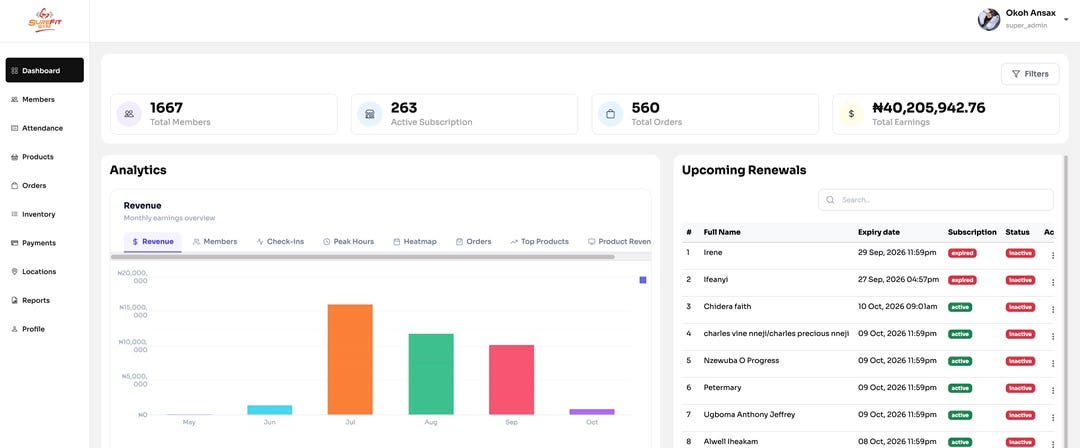
I’m also passionate about business growth, so I gravitate toward software that helps businesses grow. Recently, a gym approached us for a management system. The owner cared most about the accounting side: was he making or losing money, which branch earned the most, and which plans people paid for most. We took on the challenge, built it, and delivered. When we went live, I watched the business make money in real time, and the owner could see it from anywhere in the world. Then I wrote a script to analyze the data and was stunned: the busiest branch wasn’t the most profitable. The one with the “insignificant” daily subscription was out-earning the head branch. Watching real people use something I built, and seeing data help a business make better decisions, is what fulfils me most.
Technology is changing incredibly quickly, especially with AI. From where you sit as someone who builds with technology, how are you making sense of this changing landscape? What excites you and what worries you about where things are headed?
When I first used AI, I was intimidated and worried about the future. Then I heard Sam Altman say on a podcast that the calculator helped engineers build bridges faster: it freed up human computation for bigger work. That changed everything for me. Now I use AI as a tool, a co-worker, and a senior developer, depending on the day, and my output has improved enormously. One simple analogy opened up the possibilities.
What worries me most? The AI videos our parents keep forwarding on WhatsApp 🤣. On a serious note, it’s overdependence and the erosion of human creativity. Flyers used to be works of art, and now there’s junk everywhere. Then there are deepfakes, which could badly damage how information spreads, especially in an environment like ours where we verify very little.
There’s also the cost. More users means more servers, more servers means higher costs and a bigger environmental footprint, and somewhere in Congo a child is mining the raw materials for that infrastructure. These are real concerns.
A look at some of Hogan’s work.


We can’t do a Proof of Life without talking about Nigeria. How are you experiencing the country right now, especially the economy? After watching Nigeria struggle with many of the same problems for so long, do you still find it easy to hope for something better?
Lately I’ve developed an interest in history, African history in particular. I’ve been looking at life before and after colonialism, and then narrowing it down to Nigeria. The more closely I look, the clearer it is that great harm was done to us. We’re divided along lines of religion and tribe, and within each religion there are more sub-divisions. Those invisible lines stop us from seeing or reasoning beyond them, and they’ve held the country back more than we like to admit.
Where there’s life, there’s hope, so yes, I believe there’s hope for Nigeria. I just don’t see it arriving anytime soon. We still live in a country where people vote for someone because he shares their tribe or religion, not because of competence or integrity, and people with that mindset outnumber the rest. Most of us are still mentally enslaved, and until we’re liberated, we may never see the Nigeria we’re hoping for.


You are building a life with your wife. What do you cherish most about her, and what is one memory with her that you know you’ll probably still be talking about years from now?
She’s kind, cheerful, and has a beautiful smile. We started out as colleagues, back when she was serving. We bonded slowly over work, and then my work gadget broke. Fixing it was going to cost half a million naira, and I didn’t have it. My income streams existed, but none of them were flowing at the time. I mentioned it to a few friends and got the usual “it is well, God will see you through.” I wasn’t asking for money, just sharing a burden.
When I told her, she said, “Go and look for the money. If you can’t find it, I’ll be your last resort.” I was stunned. No lady had ever said that to me. I tried, I couldn’t raise it, so I asked her, and she sent it. I fixed the gadget and got back to work.
When I paid her back, I paid with interest. Then she told me something that hit me hard: she never lends money she can’t afford to lose, and if I hadn’t paid, she would have counted it as a loss and moved on. She just wanted to help a friend. In that moment, I knew I was going to marry her. That was around 2023.


And finally, let’s end with the Hogan that doesn’t make it into LinkedIn bios or serious conversations. What’s one random thought that has been living rent-free in your head lately?
Life is every second that passes. Live it, and make it count.
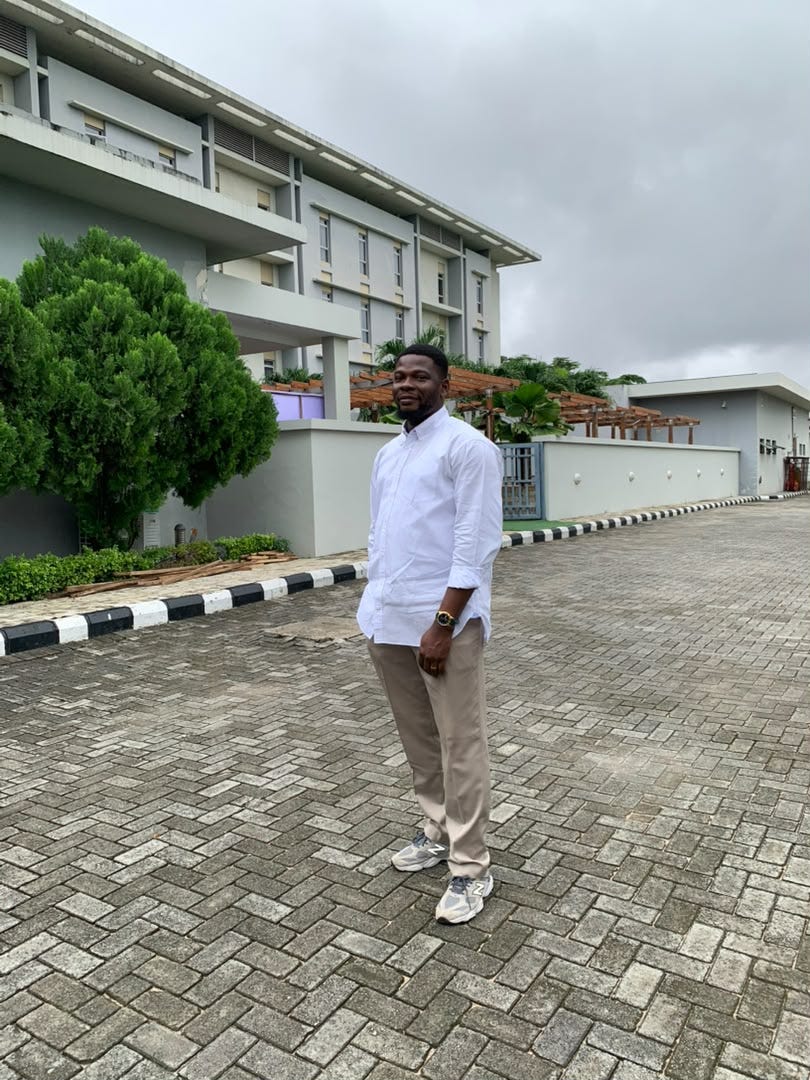
The lassssssstttt man from there has spoken! Have a great life, my brother.
Random Thoughts: The Experience
Last weekend at SOHR Potluck 2.0, an idea that had been rumbling in my mind came to life. 15 friends gathered to analyze and debate the random, profound, and whimsical thoughts that regularly flicker in my brain.
That moment summed up what we do at SOHR, giving creatives the capacity to bring their ideas to life, and I dare say their random thoughts.
Thank you to everyone who came.
If you missed it, here is a snippet, and of course YAM is better than Plantain.
If you enjoyed Hogy’s Proof of Life, you should meet Dami and the September collective.

Life Lately

There’s something about Saturday mornings I just love, and no, it’s not that I get to play football with ALCOHOL FC. It’s the calm that comes with it. The only day of the week that doesn’t feel rushed, if you know what I mean.